


Picture hanging system: what options?
To hang a picture neatly, a few simple solutions are enough to achieve a secure and well-aligned installation.
- Hooks and nails: X hooks, picture hooks
- Screws + anchors: the most reliable solution for heavy frames
- Picture rail: hang and move without re-drilling
- Back fittings: D-rings, eye screws, cord (and how to avoid a tilted frame)
- No-drill: adhesives, strips and limits
- Non-fixed alternatives: frame shelf, floor placement

Choosing the right picture hanging system: the 5 criteria that change everything
Before comparing each picture-hanging system, I always advise starting from very concrete criteria: the actual weight of the frame (frame + glass + mat), the nature of the wall (plasterboard, brick, concrete), how often you change it, and the level of precision expected (millimeter alignment or not). These parameters prevent 90% of mistakes.

In the field, I often see frames that “tilt” because the back fitting is too flexible (loose cord) or badly positioned. Finally, think about the risk of marks: some systems are perfect for rentals, others are made for a long-term installation, with a permanent fixing but more intrusive.
Hooks and nails (X hooks, picture hooks): quick, effective, but not for every wall
To hang pictures on a plasterboard wall, picture hooks (often called “X” hooks) are a classic: they distribute the load thanks to multiple points. It’s a picture hanging system very quick to install, ideal for medium sizes, and useful when you want to keep the hole small.
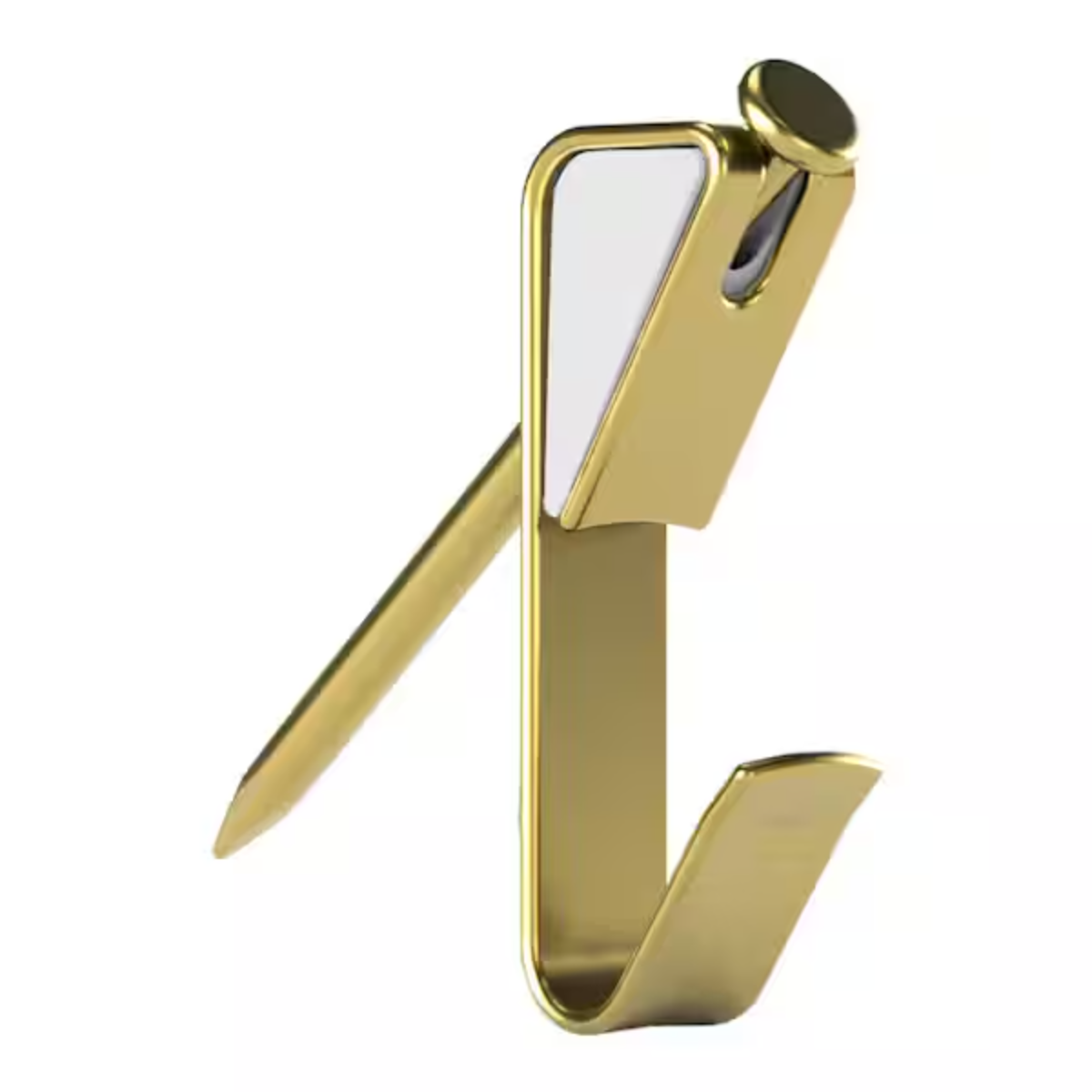
However, on a very hard wall (concrete) or very crumbly one (old plaster), the result can be disappointing: the point doesn’t go in properly or enlarges the weakened area. In those cases, I switch to a screw/anchor solution. If you’re composing a black-and-white picture wall, alignment is often more demanding: plan a paper template or a laser, especially if you mix several sizes as in a black-and-white picture selection to achieve a perfect grid.
Screws + anchors: the safest solution for heavy frames (and the most universal)
When a frame exceeds a few kilos, or when the artwork is valuable (glass, floater frame, large format), screws + anchors remain the most robust system. It’s a picture hanging system reliable and compatible with most substrates, provided you use the right anchor: Molly for plasterboard, nylon anchor for brick, an anchor suited for concrete.

My interior design consultant tip: keep a safety margin. If a manufacturer states 10 kg, I aim for a comfortable installation at 6–7 kg, especially if the wall is old. And to prevent the frame from “tilting”, add a small silicone pad at the bottom if needed: you gain in visual stability and protect the wall, without making the installation heavier.
Picture rail (rail + cable system): the premium option to move your frames without re-drilling
The picture rail is, in my view, one of the best investments if you often change your arrangement. You fix a rail at the top of the wall (or on the ceiling depending on the models), then hang cables with adjustable hooks. It’s a modular system and much appreciated in galleries, but also in homes where one likes to rotate artworks with the seasons.

Its advantages are concrete: no need to re-drill for each new frame, easier alignments (adjust height to the millimeter), and you can manage several pictures on the same line. However, you must accept a small technical presence (the rail) and plan a higher budget than classic hooks. From a decorative standpoint, it’s ideal for an evolving collection, a photo series, or hanging mismatched frames unified by the same sight line.
Back fittings: D-rings, eye screws, cord… and why they often make frames tilt
The back fitting is decisive: an excellent hook won’t compensate for a poorly planned rear mounting. The most common options are D-rings (very stable), eye screws (effective but must be fitted correctly), and cord (practical but more prone to “slack”). For a neat result, D-rings installed at the same height remain a safe bet.

In the apartments I work on, frames that go crooked often have one of these causes: cord too long, rings placed too low, or the frame “sliding” on a single hanging point. To fix it, shorten the cord, raise the attachment points, or use two wall points when possible. You gain an impeccable hold and more consistent alignment over time.
Adhesives, strips and picture glue: useful in rentals, provided you respect the limits
No-drill solutions (repositionable strips, high-strength adhesive tapes) are tempting, especially in rentals. They can work very well for light frames, on well-adhered paint and a clean surface. In this category, picture glue is often misunderstood: we’re usually talking about strips or pads, not a universal glue capable of holding a heavy frame on any wall.

The limits are clear: humidity, powdery walls, poorly prepared satin paint or textured wallpaper greatly reduce adhesion. And beware of frames under glass: if it falls, breakage is immediate. My “safe” approach: reserve adhesive for small formats, lightweight framed posters, or areas where you want to avoid any marks. For a pared-back interior, these systems fit with light, graphic works, typical of a minimalist picture mood where sobriety and precise alignment are prioritized.
Alternative hangs (easel, frame shelf, floor placement): when you don’t want to drill at all
To display pictures without fixing them to the wall, “placed” alternatives are excellent: frame shelf (picture ledge), console, mantel, or even floor placement for a large format. It’s a decorative choice in its own right, creating a studio-like atmosphere, and allows you to change the selection freely. You often get a lively result and a more spontaneous feel.

In practice, I recommend these options when the wall is fragile (old plaster), when you’re in strict rental, or when you want to test a composition before drilling. One caution: child/animal safety (risk of tipping). In that case, a discreet anti-tip fix or a small stop can secure everything while keeping a relaxed staging.
Frequent mistakes and checklist: to hang pictures straight, in the right place, and without stress
The most common mistakes are not “technical”, they are methodological: you measure from the top of the frame instead of the hanging point, you forget the height of the fitting, or you neglect the nature of the wall. To hang pictures neatly, I recommend a simple method: first locate the center line (often 145–155 cm from the floor depending on the room), then calculate the drilling point from the back fitting.
Mini checklist before drilling: (1) frame weight, (2) wall type, (3) choice of suitable anchor/hook, (4) measurement “from the top of the frame to the hanger”, (5) spirit level or laser, (6) protective pads at the bottom. This routine avoids fixes, unnecessary holes and frames that “dance”. You save time and a professional finish from the first installation.

A picture hanging system is chosen first according to the weight, the wall and your desire to change (often or rarely). Hooks and adhesives suit light frames, screws/anchors secure heavy pieces, and the picture rail remains the most flexible solution. In case of doubt, always prioritize fixing safety and a well-adjusted rear fitting.


